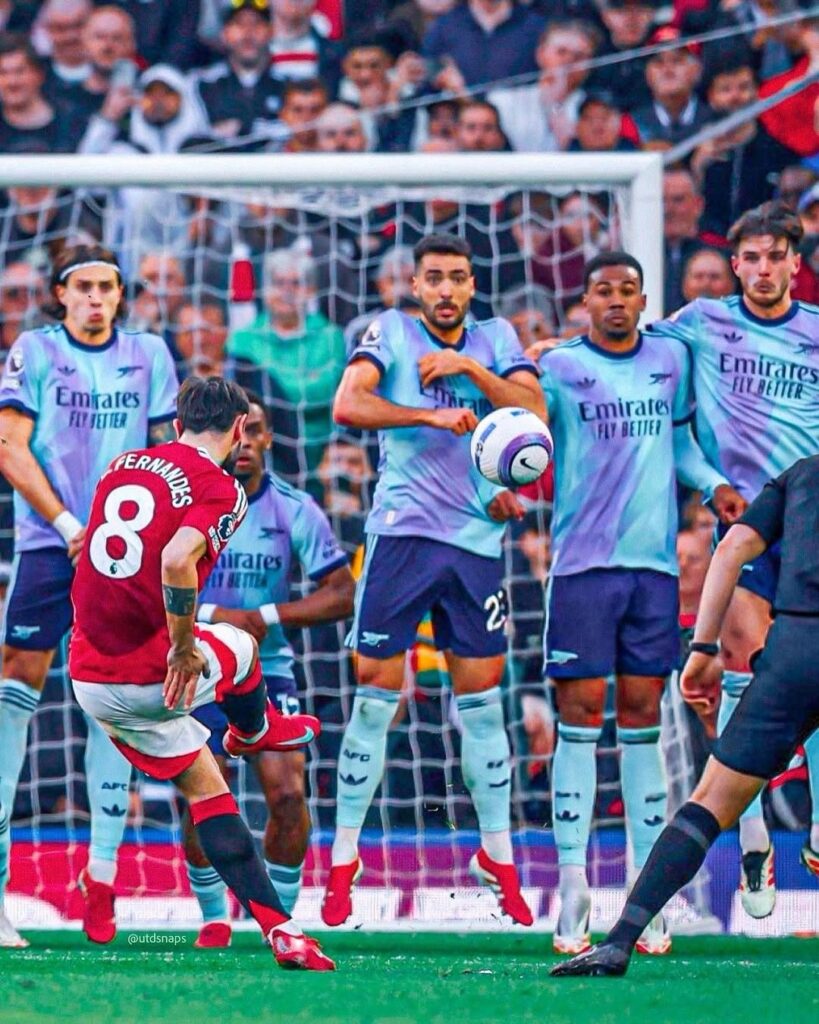
For a decade, the gospel of elite football was possession. Pass your way to dominance, control the ball, control the game. But a quieter, more ruthless trend has taken hold across Europe’s top leagues: the set piece has re-emerged as one of the most decisive weapons in the sport. Corners, free-kicks, and long throws — once treated as afterthoughts — are now meticulously engineered routines that win matches, titles, and increasingly, the jobs of the coaches who master or mishandle them. This is the era of the set-piece specialist.
From Afterthought to Obsession
The numbers tell the story of a genuine tactical shift. In the 2025-26 Premier League season, teams have been scoring from dead-ball situations at a rate rarely seen before, with corner conversion rates up noticeably on previous campaigns. The cause is no mystery: nearly all of the 20 top-flight clubs now employ a specialist set-piece coach, a role that barely existed in most backrooms a few years ago. What was once delegated to a few minutes at the end of a training session is now a dedicated discipline, complete with its own coaches, analysts, and bespoke routines.
In a league where the margins between success and failure are razor-thin, set pieces offer something open play cannot: reliability amid chaos. A perfectly drilled corner routine is repeatable in a way that a flowing 20-pass move is not. Managers have realised that engineering even a handful of extra goals from dead balls each season can be the difference between a trophy and an also-ran finish.
Arsenal: The Gold Standard
No club embodies the set-piece revolution like Arsenal. Under coach Nicolas Jover, the Gunners have become arguably the most feared dead-ball team on the planet. The figures from 2025-26 are staggering: Arsenal scored 24 set-piece goals across all competitions — the most of any side in Europe’s top five leagues — with set pieces accounting for around 35% of their total Premier League goals. To put that in historical context, that is a higher share than any title-winning side in Premier League history, surpassing even Manchester United’s 2007-08 champions.
The reaction has bordered on disbelief. Liverpool great Jamie Carragher admitted he had never seen anything like Arsenal’s corner dominance, describing the sense that the Gunners look certain to score every time they win one. Mikel Arteta, for his part, has said he envisioned building a team around set-piece goals years before it came to fruition.
Jover’s background reveals how specialised the craft has become. A former video analyst at Montpellier, he honed his set-piece expertise at Brentford before joining Manchester City in 2019, where he worked alongside Arteta. He followed Arteta to Arsenal in 2021, and his innovations — near-post flick-ons, zonal overloads, and carefully choreographed blocking runs — have rewritten what is possible from a corner. So valued is his work that he reportedly earns a bonus every time Arsenal score from a dead ball, and the club tied him to a contract alongside Arteta’s key lieutenants to fend off rival interest.
The Cautionary Tale: Liverpool
If Arsenal show the rewards of mastering set pieces, Liverpool have provided a stark illustration of the cost of getting them wrong — and, in doing so, proved just how seriously the modern game now takes the discipline. Despite their pedigree, the Reds endured a miserable season at dead balls, conceding the most set-piece goals in the division while scoring only a handful themselves. Head coach Arne Slot repeatedly lamented his side’s “negative set-piece balance,” and captain Virgil van Dijk identified the chaotic second phase of corners as the team’s undoing.
The consequence was telling. Liverpool parted ways with their set-piece coach, Aaron Briggs, midway through the campaign — a clear signal that underperformance in this one specialised area was now serious enough to cost a coach his job at a club of the highest standing. A few years ago, the idea of sacking a coach specifically over set-piece numbers would have seemed absurd. Today, it is simply a measure of how central these moments have become to elite football.
Why the Whole League Is Buying In
The spread of set-piece coaching across the league is the clearest evidence that this is a structural change, not a passing fad. Arsenal’s success has triggered a copycat effect, with rivals scrambling to find their own dead-ball edge. Newcastle, for example, became heavily reliant on set pieces this season, sourcing a large share of their goals from dead-ball situations. Even the long throw — long dismissed as crude and old-fashioned — has come back into vogue as teams hunt for any repeatable route to goal.
Several forces are driving the investment. First, set pieces are a market inefficiency: for a relatively small outlay on a specialist coach and dedicated training time, clubs can unlock a meaningful goal advantage. Compared to the tens of millions spent on a single transfer, a set-piece coach is astonishing value. Second, modern data and video analysis allow teams to study opponents’ marking schemes in forensic detail, designing routines to exploit specific weaknesses. Third, in an age of increasingly organised, compact defensive blocks, breaking teams down in open play has become harder than ever — making the dead ball a vital alternative route to goal.
The Anatomy of a Modern Routine
What separates today’s set pieces from the hopeful lofted corners of the past is the sheer level of design. Elite routines are built around deception and creating space. Blocking runs — where attackers screen markers to free a team-mate, in a manner reminiscent of basketball or American football — are now commonplace. Clustered groups of players peel off in choreographed patterns to lose their markers. Near-post flicks redirect the ball into dangerous central zones, while decoy runners drag defenders away from the intended target.
Just as important is the second phase: what happens when the first delivery is cleared. The best set-piece teams position players specifically to win those loose balls on the edge of the box and recycle the attack, while the worst, as Liverpool discovered, are repeatedly punished in exactly those chaotic moments. It is a chess match played in the eighteen-yard box, and the teams that prepare hardest are reaping the rewards.
The Verdict
The rise of the set piece is more than a statistical quirk — it represents a genuine shift in how matches are won at the highest level. As open play becomes ever more congested and defensive organisation ever more sophisticated, the dead ball offers a rare zone of controllable, repeatable advantage. Arsenal have shown what is possible when a club commits fully to the craft; Liverpool have shown the price of neglecting it.
The lesson has not been lost on anyone. Across Europe, clubs are pouring resources into specialist coaching, data analysis, and bespoke routines, treating set pieces as the high-value weapon they have become. The romantics may mourn the decline of pure flowing football, but the pragmatists know the truth: in the modern game, the team that wins the dead-ball battle very often wins the match. Set pieces are no longer football’s footnote. They are its cutting edge.